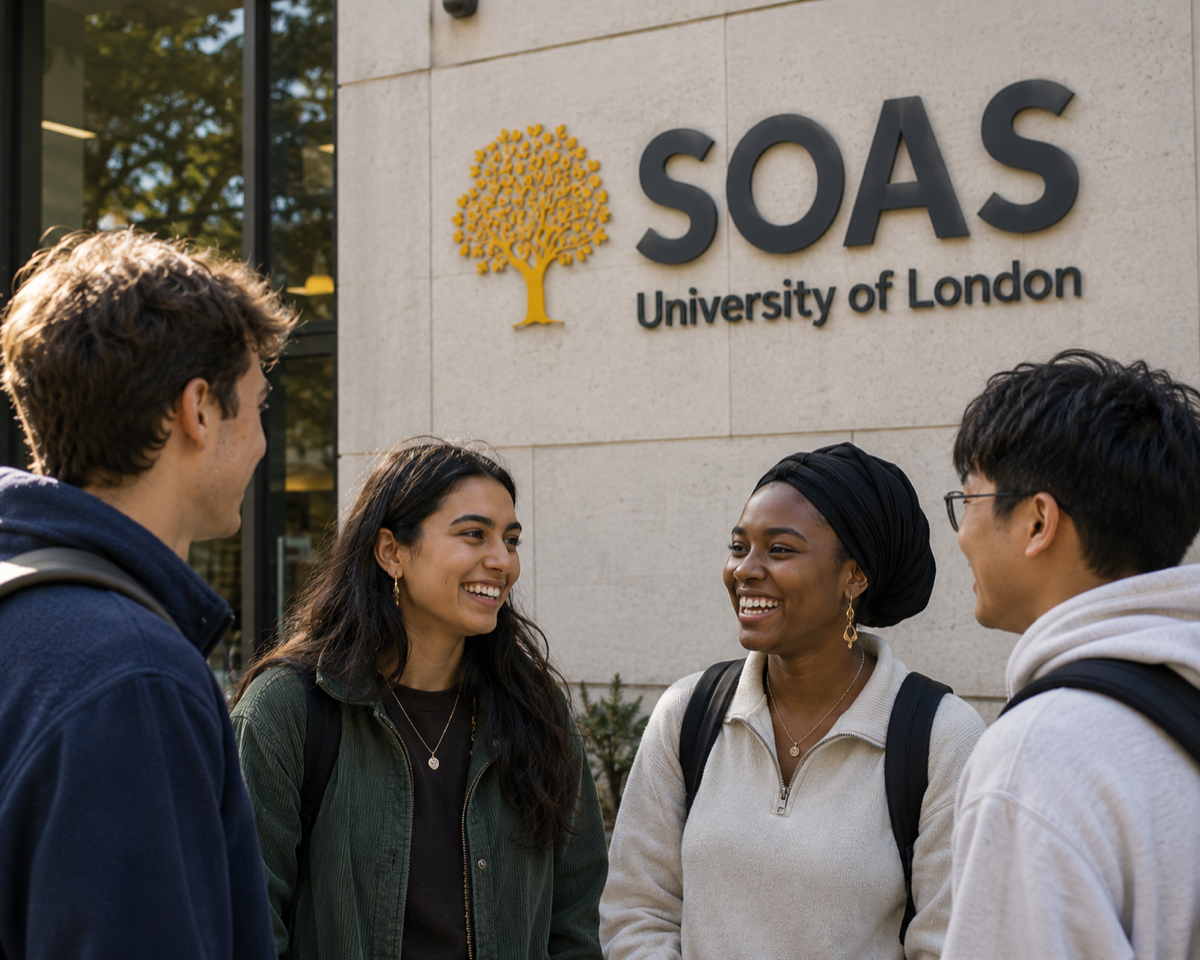
BA History and History of Art
About this course
History and history of art together offer two distinct but deeply complementary ways of understanding the past and the present. History gives you the tools to analyse how events unfolded, how societies changed, how power was exercised and contested, and how people in different times and places made sense of their world. History of art extends this outward to include the visual dimension of human experience, examining how artists, patrons, institutions and cultures have used image-making and material objects to express, contest and remember. At the School of Oriental and African Studies in London, this combination carries a distinctive character. SOAS has particular depth in the arts and histories of Asia, Africa and the Middle East, which means that your engagement with both history and art history will be genuinely global in scope, moving beyond the Eurocentric canon that can dominate these disciplines elsewhere. You will encounter artistic traditions and historical narratives that are less familiar but no less significant, which sharpens your comparative understanding and challenges assumptions about what is universal and what is particular. The programme runs over three years and includes a foundation year, which prepares you for advanced academic study. You will develop skills in archival and primary source research, critical reading, art historical analysis, visual interpretation and essay writing. Both disciplines reward careful attention to evidence and the ability to construct well-supported arguments, making the intellectual training they provide highly transferable. Graduates go on to careers in museums and galleries, heritage organisations, auction houses, arts administration, cultural journalism, publishing, education, the civil service and international organisations. Some pursue academic careers, going on to postgraduate study in history, art history or area studies. The ability to read visual and textual evidence carefully and to communicate about it persuasively is valued across many fields.
Syllabus & Modules
Typical curriculumStudent Satisfaction
National Student Survey - 50 respondents (62% response rate)
Similarly Ranked Alternatives




What comes next? 🎓
Choosing the right university starts with choosing the right school. Explore transparent, data-driven school profiles powered by official DfE statistics.
Explore Schools on WhatSchool.ai →