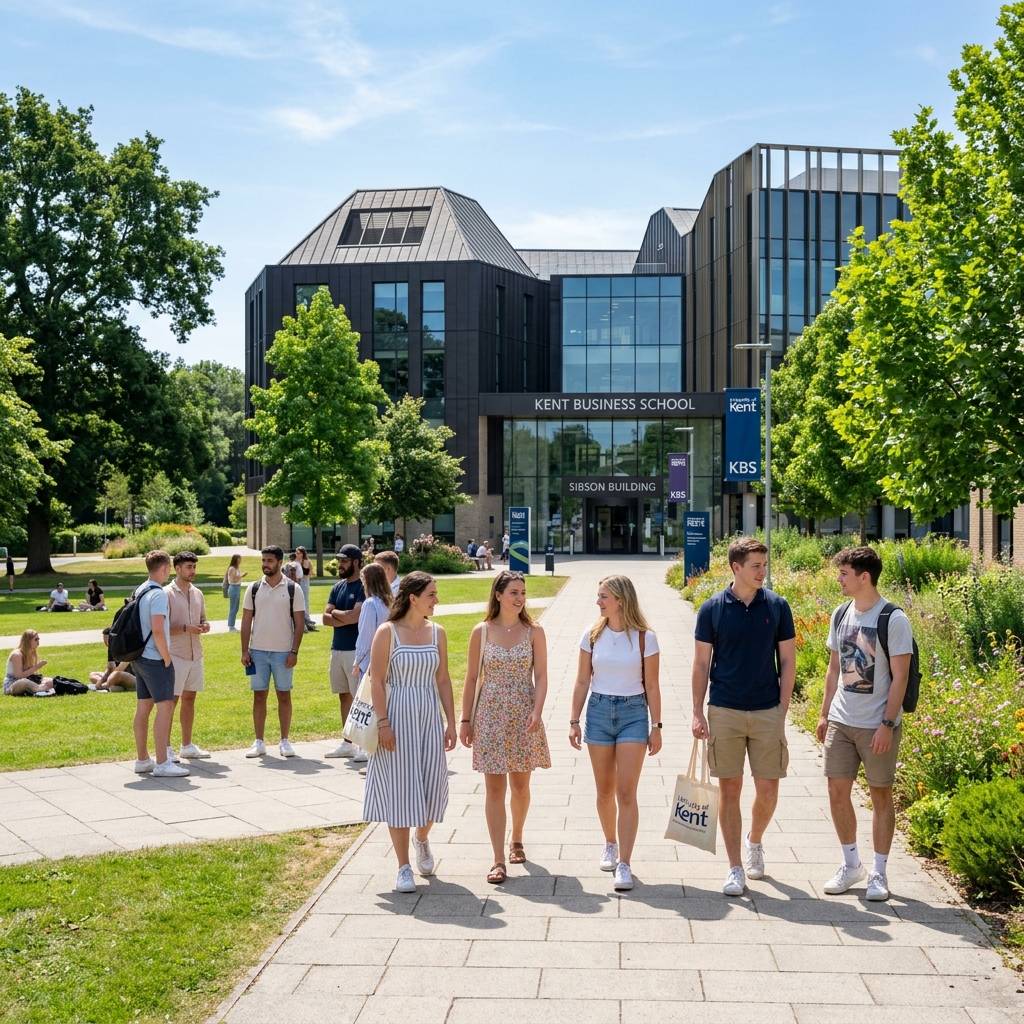
BSc International Business
About this course
International business examines how organisations operate, compete and grow across national boundaries, in a world where supply chains are global, regulation is shaped by international agreements and firms must navigate starkly different markets, legal systems and cultural environments. It is a discipline that sits at the intersection of management, economics, political science and sociology, asking not just how businesses are run but how the global systems within which they operate shape their strategies and their effects on the societies they touch. At the University of Kent, studied part-time, you will explore the global dimensions of strategy, finance, marketing, operations and human resource management, alongside the macro-level frameworks of international trade, global governance and the political economy of development. The programme develops your ability to analyse how global systems work, to understand how organisational choices play out across different national contexts and to think critically about the social and ethical dimensions of international business activity. Kent's distinctive international character and its location on the historic crossing point between Britain and continental Europe provide a fitting context for this kind of study. Graduates of international business are well placed for careers in multinational corporations, global supply chain management, international trade, export finance, management consultancy with international clients, development organisations and government departments with international portfolios. The analytical breadth of the degree, combining business knowledge with understanding of global political and economic structures, makes graduates attractive to employers in sectors where navigating complex international environments is a central challenge. Some graduates go on to postgraduate study in international business, management, international relations or law, while others move directly into careers in global firms or organisations.
Syllabus & Modules
Typical curriculumStudent Satisfaction
National Student Survey - 10 respondents (57% response rate)
What comes next? 🎓
Choosing the right university starts with choosing the right school. Explore transparent, data-driven school profiles powered by official DfE statistics.
Explore Schools on WhatSchool.ai →