BA Liberal Arts
About this course
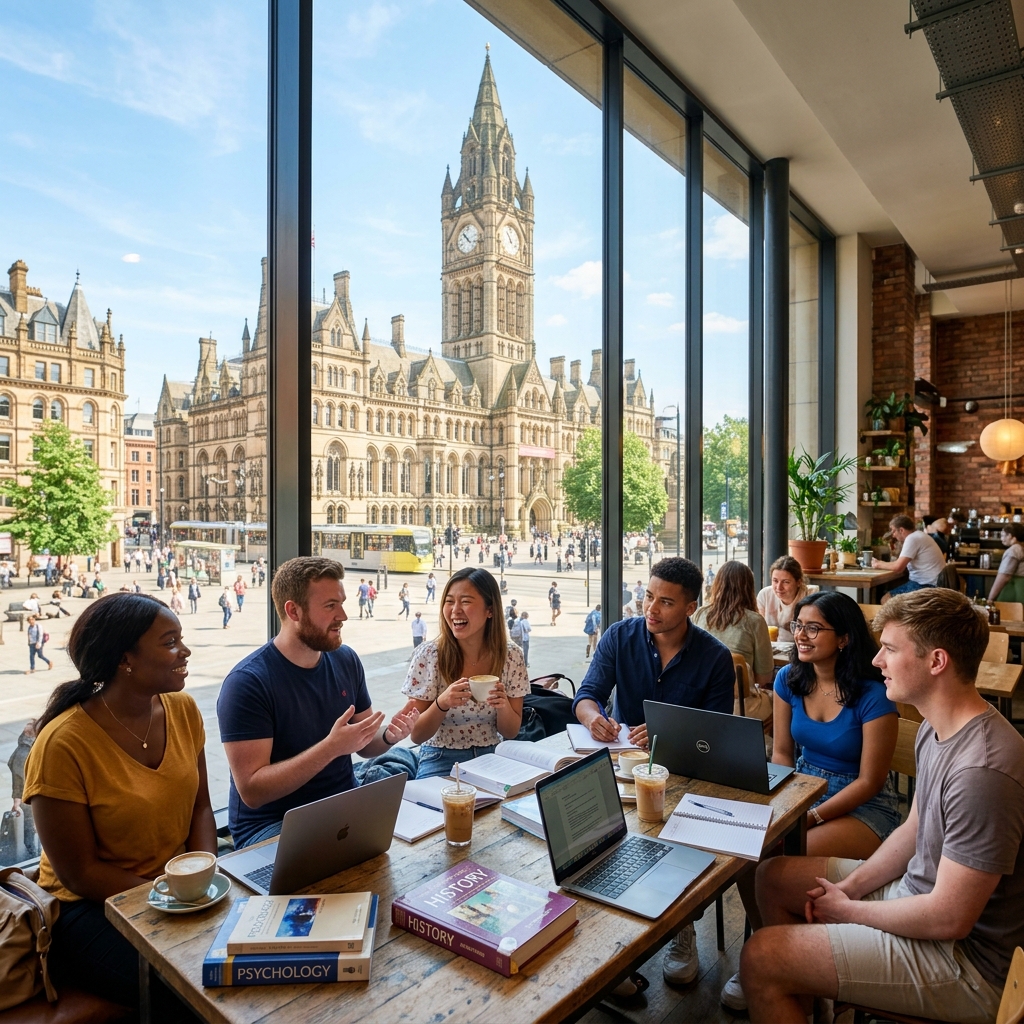
Liberal arts is an approach to university education that refuses the narrow specialism of most degree programmes, asking instead that students engage seriously with more than one way of understanding the world. Its roots lie in the classical tradition of education that prepared citizens not just for one profession but for informed participation in public life, and its modern form brings together elements of humanities, social sciences, arts, and sometimes sciences in a structured but wide-ranging curriculum. Students of liberal arts develop the habit of thinking across disciplinary boundaries, which turns out to be exactly the kind of flexibility that complex problems and careers require. At the University of Manchester, this three-year full-time programme includes a sandwich year with work placement, which grounds the broad intellectual ambitions of the degree in practical professional experience. The placement year gives you the opportunity to work within an organisation, applying the diverse skills and perspectives you have developed and gaining a clearer sense of how liberal arts thinking translates into professional contexts. Throughout the academic parts of the programme, you will draw on a range of disciplines, typically including philosophy, literature, history, social science, and cultural studies, engaging with major texts and traditions while developing skills in critical analysis, persuasive writing, and collaborative thinking. Manchester's size and breadth as a university means that you will have access to teaching and resources across multiple faculties, and the liberal arts programme is designed to exploit that breadth. The degree attracts students who want to avoid premature specialisation and who are comfortable with the uncertainty of a broadly framed education. Many find that it is precisely this breadth that opens up the widest range of opportunities. Graduates of liberal arts programmes work in law, journalism, public policy, management consultancy, publishing, education, the civil service, and the arts. The combination of analytical rigour, communication skills, and intellectual flexibility is valued by employers who want people who can think clearly about unfamiliar problems. Postgraduate study across a range of disciplines is also a common route.
Syllabus & Modules
Typical curriculumStudent Satisfaction
National Student Survey - 10 respondents (92% response rate)
What comes next? 🎓
Choosing the right university starts with choosing the right school. Explore transparent, data-driven school profiles powered by official DfE statistics.
Explore Schools on WhatSchool.ai →