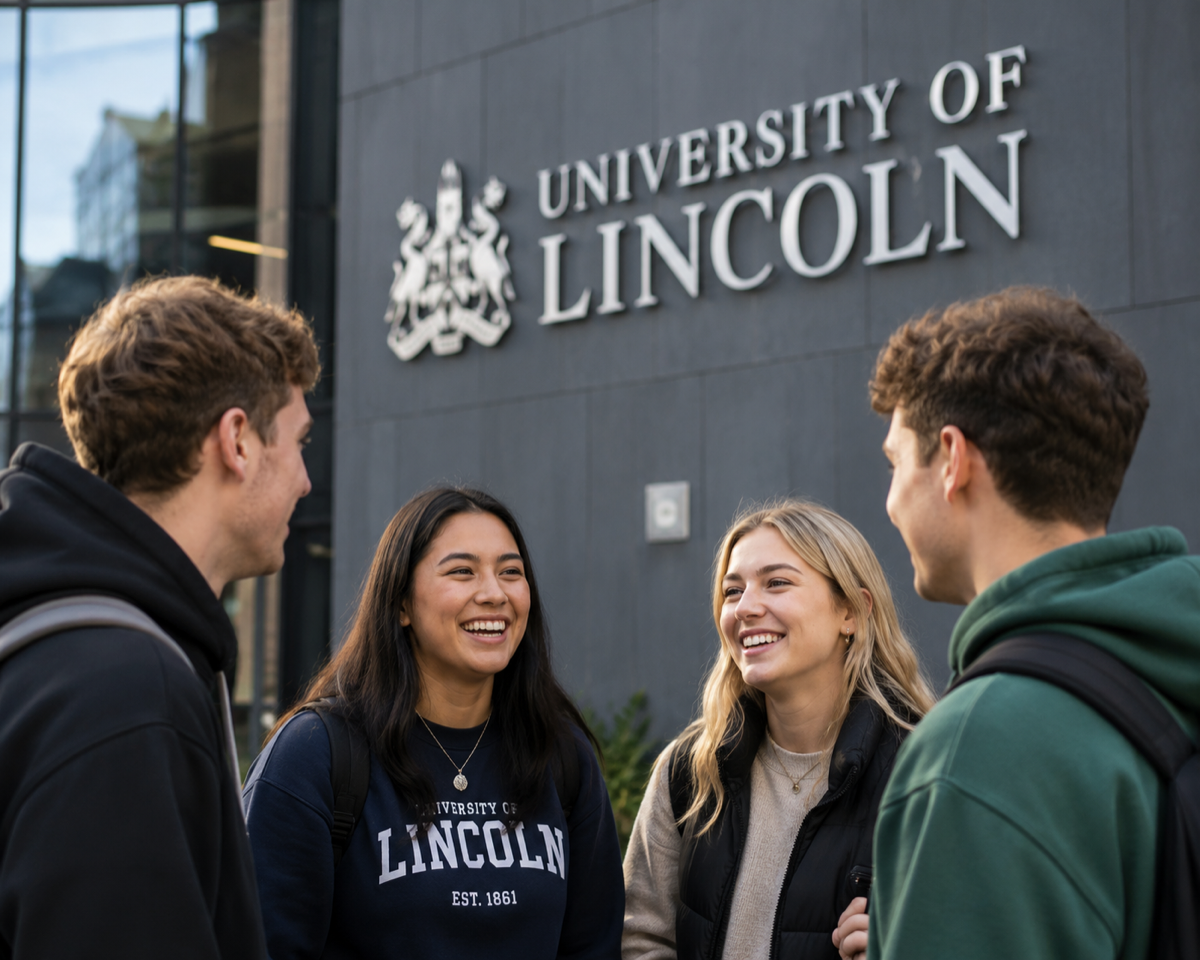
BSc Mathematics and Theoretical Physics with Science Foundation Year
About this course
Mathematics and theoretical physics is one of the most intellectually demanding combinations available at university, bringing together the two disciplines that are most concerned with understanding the fundamental structure of reality and with expressing that understanding in the most precise and general terms possible. Theoretical physics asks why the universe is the way it is, using the language of mathematics to formulate and test theories of quantum mechanics, relativity, particle physics, cosmology, and the forces that govern all physical phenomena. Mathematics provides not just the tools for theoretical physics but an autonomous domain of abstract structures with their own beauty and logic. At Lincoln this four-year full-time programme begins with a foundation year, which provides the mathematical and scientific preparation needed before the main degree begins, making the programme accessible to students who may not have studied both mathematics and physics to the highest level at school. The main degree combines rigorous mathematical training across pure and applied mathematics with the theoretical physics curriculum, including classical and quantum mechanics, statistical physics, electromagnetism, and special and general relativity. The programme also includes a sandwich year and a work placement, giving you professional experience in a physics, mathematics, or related technical context. Graduates of mathematics and theoretical physics are exceptionally well qualified for careers in research, finance, data science, and technology. The analytical and computational skills the degree develops are valued in quantitative finance, modelling, engineering, and any field where abstract reasoning and mathematical precision matter. Many graduates continue to postgraduate study, pursuing PhDs in theoretical physics, mathematics, cosmology, or related fields, or MSc programmes in financial mathematics, data science, or quantum computing. The combination is also excellent preparation for a career in secondary mathematics or physics teaching.
Syllabus & Modules
Typical curriculumStudent Satisfaction
National Student Survey - 15 respondents (80% response rate)
Similarly Ranked Alternatives



What comes next? 🎓
Choosing the right university starts with choosing the right school. Explore transparent, data-driven school profiles powered by official DfE statistics.
Explore Schools on WhatSchool.ai →