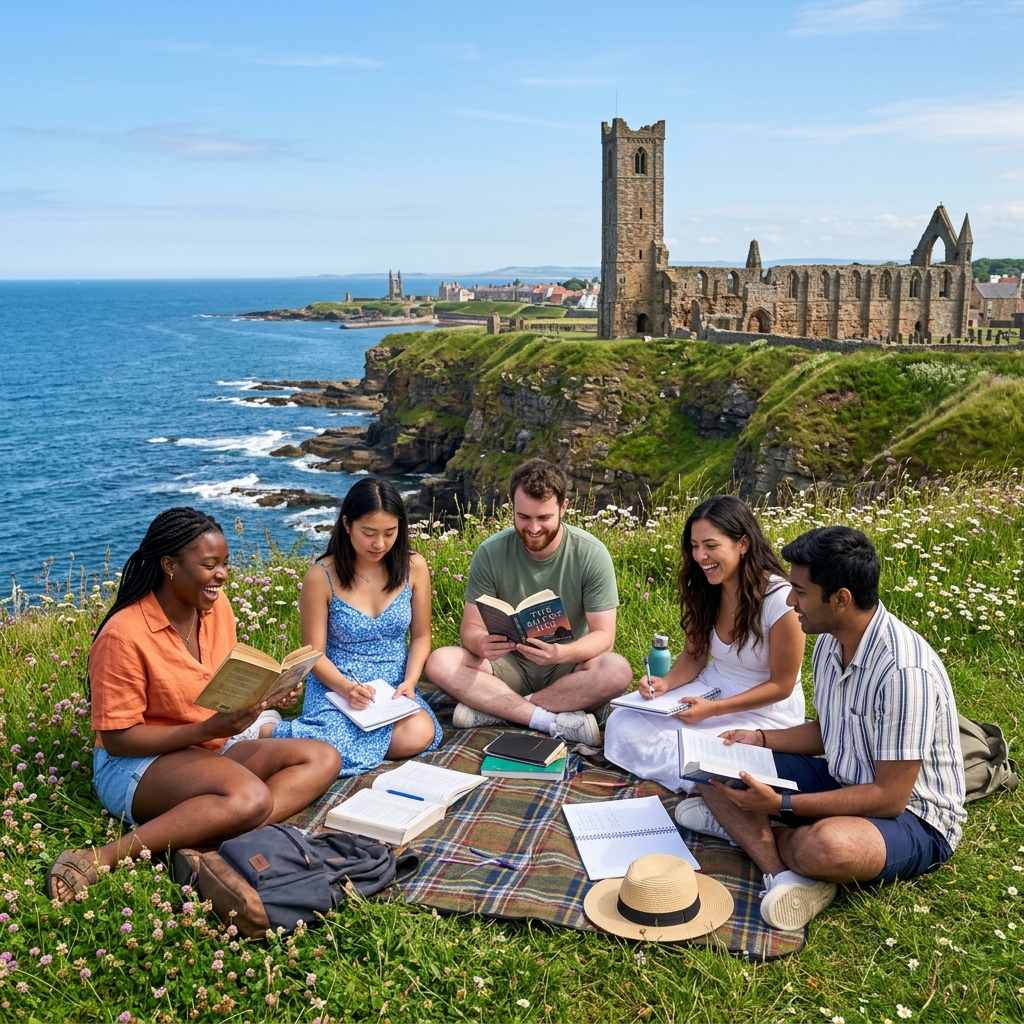
MA Modern Languages (French and German) and Ancient History
About this course
Modern languages combined with ancient history brings together the study of living linguistic traditions and the investigation of the classical world, a pairing that develops exceptional range across time and culture. French and German are two of the most internationally significant European languages, central to the politics, culture, and intellectual life of the continent. Ancient history investigates the civilisations of Greece, Rome, and the wider ancient Mediterranean through literary, documentary, and archaeological evidence. At the University of St Andrews, you will develop your proficiency in both French and German to a high level through the study of language, literature, and culture, engaging with texts and ideas from across the French-speaking and German-speaking worlds. The ancient history strand introduces you to the sources, methods, and debates that historians use to reconstruct and interpret the ancient world, from political institutions and military history to religion, gender, and material culture. Working across three fields simultaneously develops an unusual intellectual agility, training you to move between very different kinds of evidence and different scholarly traditions. This four-year full-time programme includes a year abroad, during which you will spend time in French-speaking and German-speaking countries, deepening your linguistic fluency and cultural understanding through immersion. The typical entry tariff is 200 UCAS points, reflecting the demanding nature of the programme. Graduates with this combination of skills and knowledge go on to careers in international business, diplomacy, translation and interpreting, journalism, the civil service, education, heritage, and academia. The combination of linguistic competence, historical depth, and cultural breadth is genuinely distinctive. Further study at postgraduate level in classical studies, modern languages, European history, or related fields is a natural route for those who wish to pursue scholarly careers.
Syllabus & Modules
Typical curriculumStudent Satisfaction
National Student Survey - 30 respondents (70% response rate)
Similarly Ranked Alternatives


What comes next? 🎓
Choosing the right university starts with choosing the right school. Explore transparent, data-driven school profiles powered by official DfE statistics.
Explore Schools on WhatSchool.ai →