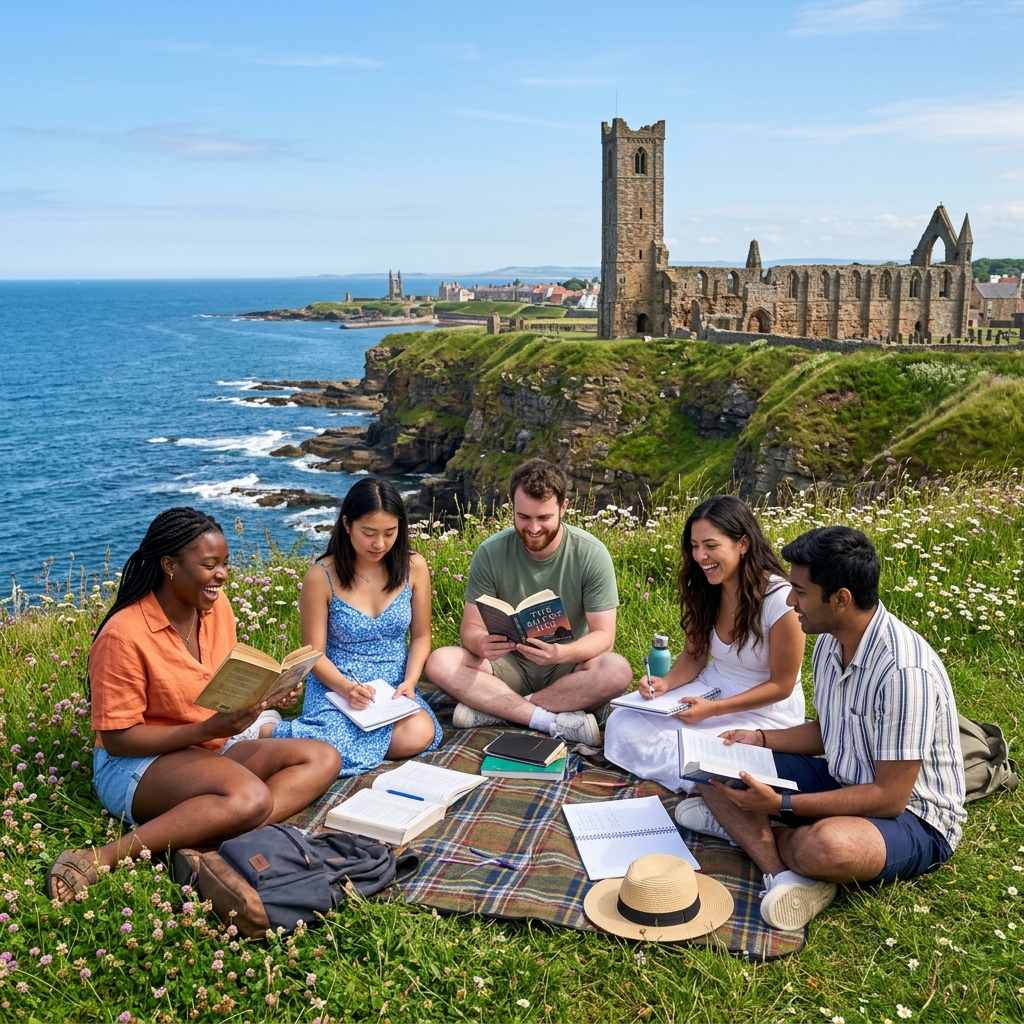
MA Modern Languages (French and Italian) and Ancient History
About this course
French, Italian, and ancient history together form an unusually coherent intellectual combination, connecting two of the great languages of the modern Mediterranean world with the study of the ancient civilisations from which much of that world's culture derives. French and Italian are both Romance languages descended from Latin, so studying them alongside ancient history creates a natural through-line from the classical world to the present, tracing how ideas, institutions, and cultural forms have evolved across two and a half millennia. For students drawn to both language and the deeper past, this is a degree of unusual richness. At St Andrews this four-year full-time programme gives you the chance to develop French and Italian to a high level of proficiency, working in literary and contemporary registers across speaking, writing, reading, and listening. You will engage with the literature, culture, history, and cinema of the French-speaking and Italian-speaking worlds, while your ancient history studies take you through the political, social, military, and cultural history of Greece and Rome, drawing on a range of textual and material evidence. The programme includes a year abroad, which you will spend in France or the Francophone world and in Italy, immersing yourself in the languages and cultures you have been studying in depth. Graduates with this combination of languages, literary training, and historical understanding are well placed for careers in teaching, publishing, journalism, the civil service, cultural institutions, diplomacy, and the arts. The capacity to work across languages and to think historically is valued across many professional contexts. Many graduates continue to postgraduate study in modern languages, classical studies, or Mediterranean history, while others move directly into careers where multilingual ability and cultural literacy are genuine assets.
Syllabus & Modules
Typical curriculumStudent Satisfaction
National Student Survey - 30 respondents (70% response rate)
Similarly Ranked Alternatives



What comes next? 🎓
Choosing the right university starts with choosing the right school. Explore transparent, data-driven school profiles powered by official DfE statistics.
Explore Schools on WhatSchool.ai →