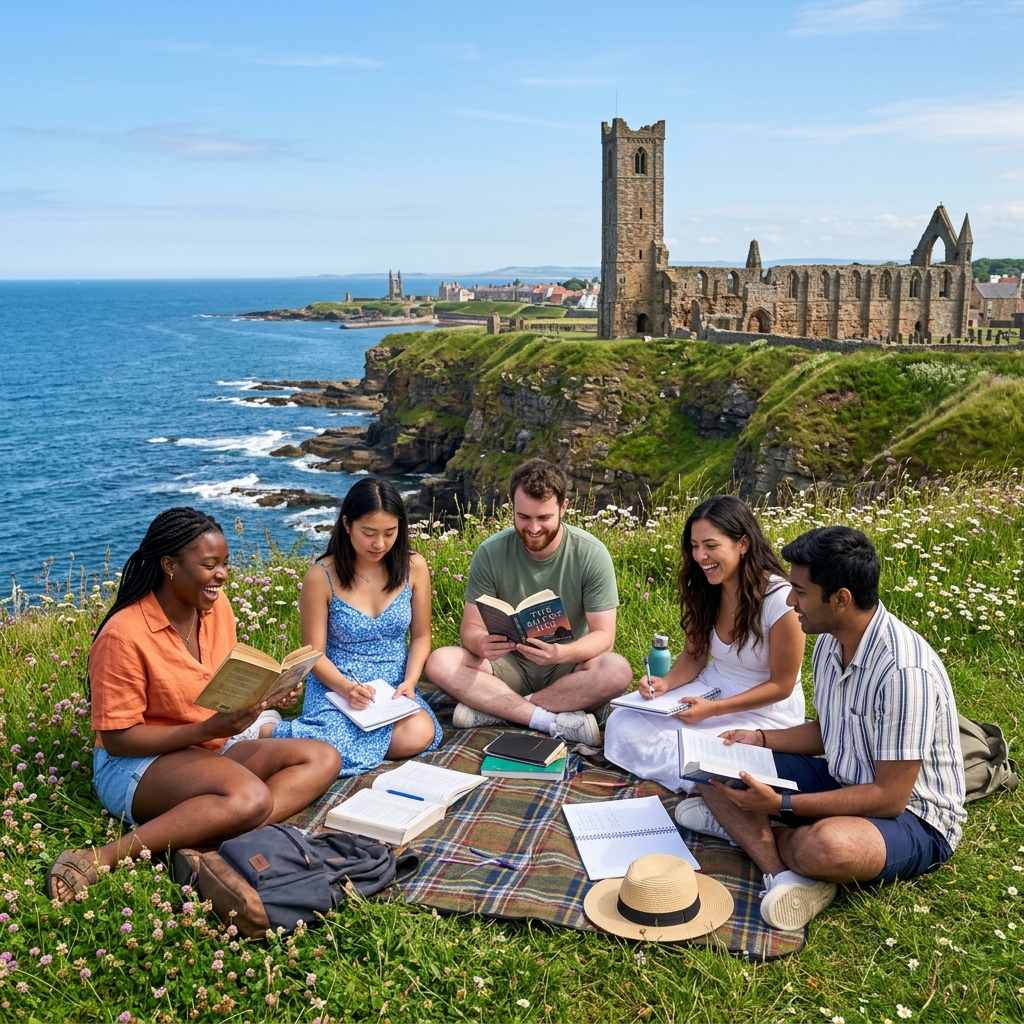
MA Modern Languages (German and Italian) and Greek
About this course
Combining German, Italian and Greek in a single degree programme is an exceptionally ambitious linguistic undertaking, giving you access to three distinct and influential European traditions, two modern and one ancient. German opens the vast intellectual and cultural world of central Europe, encompassing philosophy from Kant and Hegel to Nietzsche and Heidegger, literature from Goethe and Kafka to contemporary fiction, and the political and cultural landscapes of Germany, Austria and Switzerland. Italian brings you into contact with one of the world's richest traditions of art, literature, music and cinema. Ancient Greek takes you to the roots of Western thought in philosophy, drama, history and poetry. At St Andrews you will pursue this four-year full-time degree, developing your German and Italian to a high level of proficiency while also building the ability to read classical Greek texts with accuracy and understanding. A year abroad is embedded in the programme, giving you extended immersion in a German- or Italian-speaking environment that deepens your fluency and cultural knowledge in ways that classroom study cannot replicate. Across the four years you will engage with the cultural heritage of all three traditions, examining literature, ideas, history and film through the languages in which they were originally expressed. The breadth of the programme demands intellectual range and discipline, and the close-reading and analytical skills it develops are exceptionally transferable. Graduates with this unusual combination of languages and classical training are well positioned for careers in translation, interpreting, diplomacy, international business, publishing, journalism, the heritage sector, and education. The analytical and cross-cultural capabilities developed through three languages are valued in law, finance, and any international organisation. Many graduates also continue to postgraduate study in comparative literature, linguistics, classical studies, or modern languages, building on the distinctive expertise this degree provides.
Syllabus & Modules
Typical curriculumStudent Satisfaction
National Student Survey - 20 respondents (74% response rate)
Similarly Ranked Alternatives

What comes next? 🎓
Choosing the right university starts with choosing the right school. Explore transparent, data-driven school profiles powered by official DfE statistics.
Explore Schools on WhatSchool.ai →