High Drop-out Rate Alert
35% of students drop out or transfer from this specific course. Consider asking why on an open day.
BSc Physics with Science Foundation Year
About this course
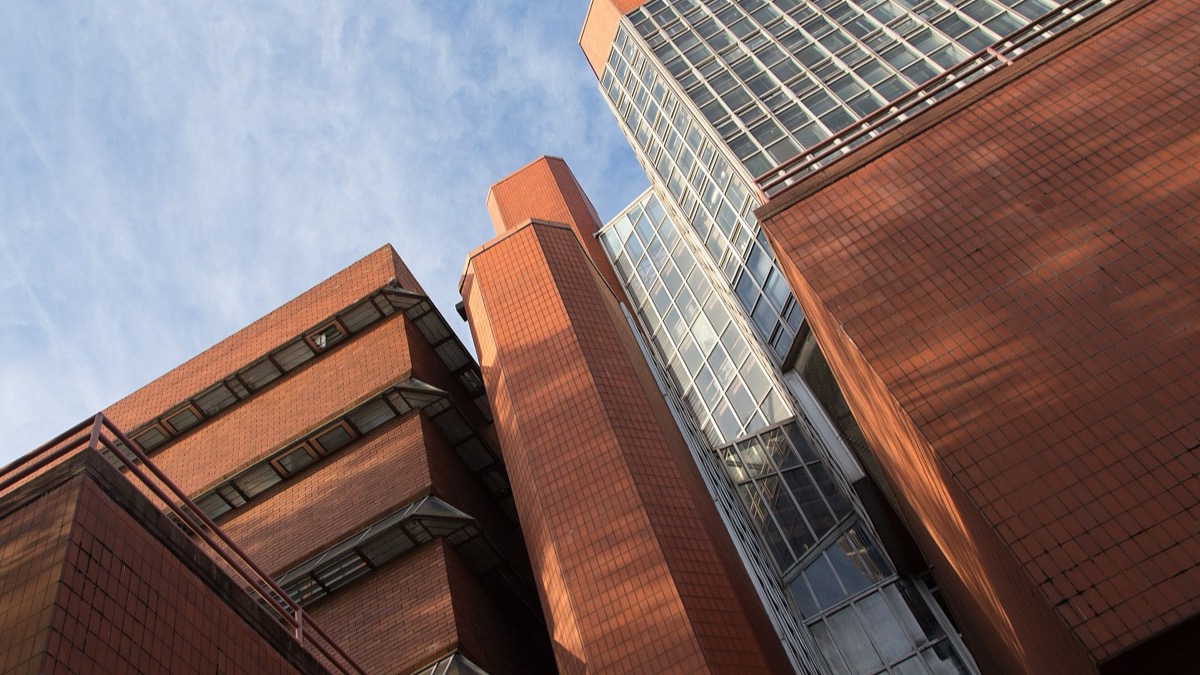
Physics is the most fundamental of the natural sciences, concerned with understanding the basic laws that govern matter, energy, space and time. From the quantum behaviour of subatomic particles to the large-scale structure of the universe, physics seeks to describe the world in its most fundamental terms, using mathematics as its language and experiment as its test. The discipline underpins virtually all of modern technology and continues to generate discoveries that reshape our understanding of reality. At the University of Lincoln this four-year full-time programme includes a science foundation year, making it accessible to students who have a strong aptitude and interest in physics but may not yet have the level of A-level mathematics and physics typically required for direct entry. The foundation year builds the scientific and mathematical foundations you need before advancing to the full physics degree, and it is delivered in Lincoln's purpose-built Isaac Newton Building, which houses the School of Engineering and Physical Sciences. The main programme includes a sandwich year and embedded work placements alongside the foundation year, giving you both a solid scientific grounding and meaningful professional experience before you graduate. You will study classical mechanics, electromagnetism, quantum mechanics, thermodynamics, optics, nuclear and particle physics, and astrophysics, developing both theoretical understanding and practical laboratory skills. Physics trains a particular quality of analytical reasoning: the ability to construct models of complex systems, to work with uncertainty and approximation, and to test ideas against experimental evidence. These habits of mind are transferable to a remarkable range of professional contexts. Graduates pursue careers in research, data science, engineering, finance, computing, education, science communication and policy. Many go on to postgraduate study in physics, materials science, engineering or related disciplines. The foundation year means the full journey from consolidating scientific fundamentals to degree-level expertise is contained within a single coherent programme.
Syllabus & Modules
Typical curriculumStudent Satisfaction
National Student Survey - 15 respondents (80% response rate)
Similarly Ranked Alternatives


What comes next? 🎓
Choosing the right university starts with choosing the right school. Explore transparent, data-driven school profiles powered by official DfE statistics.
Explore Schools on WhatSchool.ai →