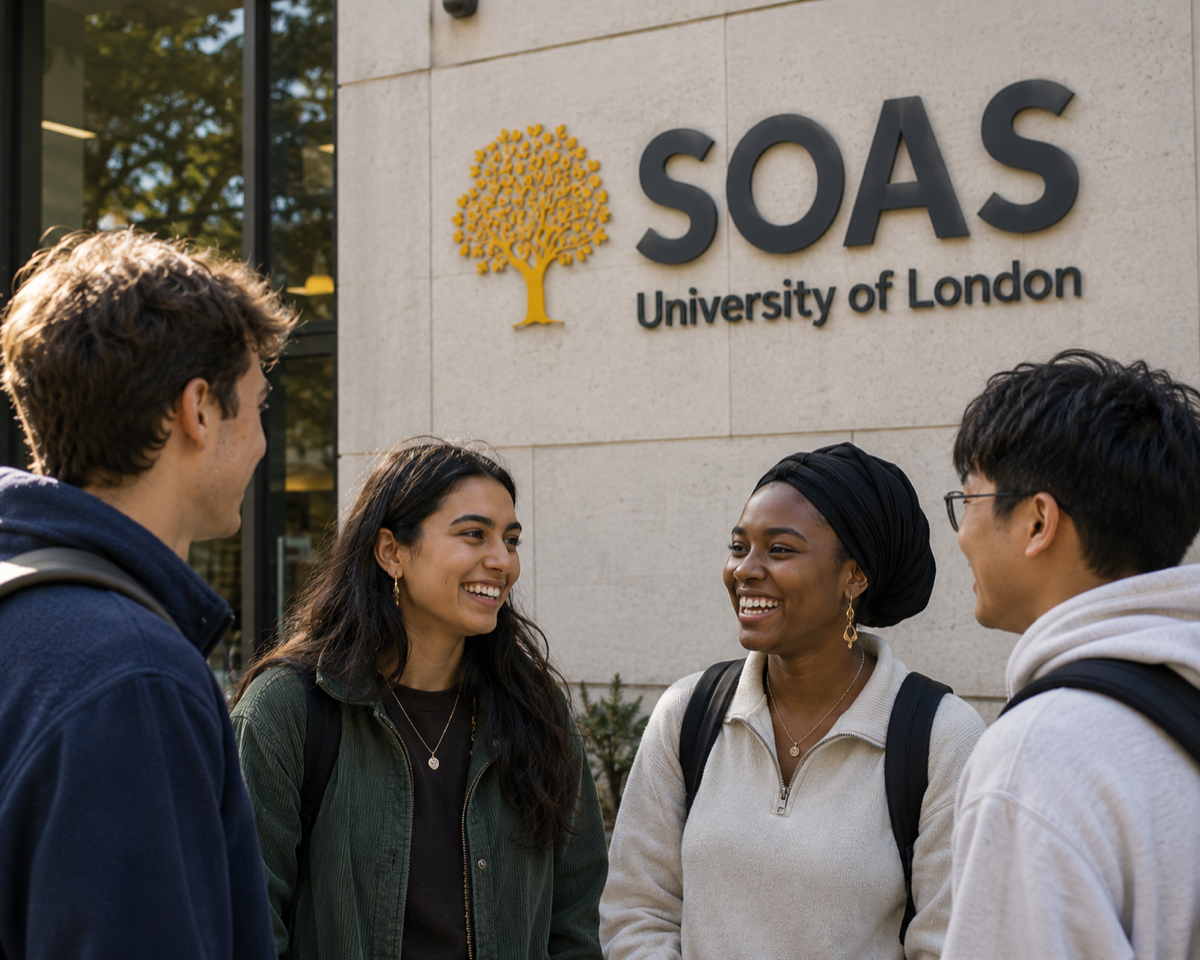
BA Politics and Economics
About this course
Politics and economics is a pairing that reflects the deep and inescapable relationship between the two disciplines. Economic policy is made by political actors; political processes are shaped by economic interests and conditions. The great questions of our time, how to respond to climate change, how to organise global trade, how to address inequality, how to govern financial systems, require understanding both the political processes through which decisions are made and the economic frameworks that analyse their consequences. Studying both together produces a genuinely integrated understanding of how societies work. At the School of Oriental and African Studies, this programme has a distinctive character shaped by SOAS's particular expertise in the global South and in Asia, Africa and the Middle East. Where many politics and economics degrees focus primarily on Western liberal democracies and mainstream economic theory, SOAS brings perspectives from diverse political traditions and from the full range of development economics, from colonial history to contemporary global inequality. A foundation year is included, providing additional academic preparation before the main degree. You will study political theory, comparative politics, international relations, macroeconomics, microeconomics, development economics and the politics of international economic institutions, developing an analytical framework that is genuinely global in its scope. The skills the degree develops, including quantitative analysis, policy reasoning, cross-cultural literacy and the ability to construct and evaluate arguments, are highly regarded by employers across many sectors. Graduates go on to careers in international organisations, government, think tanks, development agencies, financial institutions, journalism, consultancy and the civil service. The combination of economic and political analysis makes graduates particularly well suited to roles that require understanding the interaction between policy and markets. Further study in politics, economics, international relations or development studies is also a common route.
Syllabus & Modules
Typical curriculumStudent Satisfaction
National Student Survey - 10 respondents (59% response rate)
Similarly Ranked Alternatives
What comes next? 🎓
Choosing the right university starts with choosing the right school. Explore transparent, data-driven school profiles powered by official DfE statistics.
Explore Schools on WhatSchool.ai →