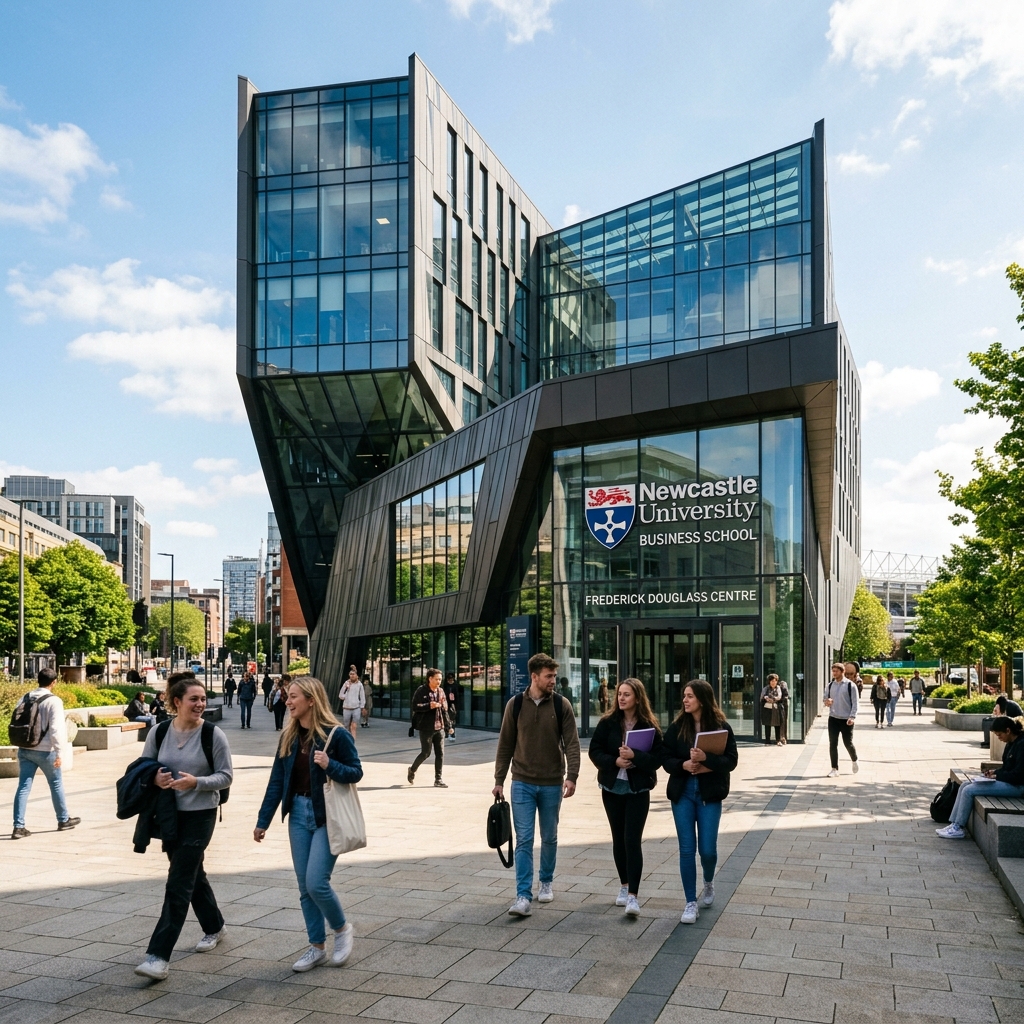
BA Politics and Economics
About this course
Politics and economics are disciplines that illuminate different dimensions of the same world: politics describes how power is organised, contested, and exercised, while economics analyses how resources are allocated, how markets work, and what drives growth, inequality and crisis. Neither can be fully understood in isolation. Fiscal policy is both an economic instrument and a political choice; electoral outcomes shape macroeconomic trajectories; international trade rules reflect balances of power as much as efficiency calculations. A joint degree in politics and economics gives you the analytical tools to see both sides of that coin. At Newcastle you will study this three-year full-time programme, developing skills in both political analysis and economic reasoning. You will examine political ideologies, institutions, and systems alongside economic theory, quantitative methods, and the analysis of markets and policy. The degree includes a sandwich year, a year abroad, and a work placement, giving you professional and international experience that enriches your academic understanding and significantly strengthens your employability. The year abroad in particular exposes you to different political economies and governance systems, deepening your comparative perspective in ways that are valuable in a wide range of careers. The combination of politics and economics is particularly valued by employers who need graduates who can think rigorously about the interaction between markets and government. Careers in financial services, consultancy, the civil service, policy analysis, international organisations, think-tanks, journalism, and politics itself are all common destinations. The quantitative skills from economics and the analytical breadth from politics together create a distinctive profile. Many graduates also continue to postgraduate study in economics, public policy, international relations, or political science, building on the interdisciplinary foundation the degree provides.
Syllabus & Modules
Typical curriculumStudent Satisfaction
National Student Survey - 15 respondents (76% response rate)
Similarly Ranked Alternatives



What comes next? 🎓
Choosing the right university starts with choosing the right school. Explore transparent, data-driven school profiles powered by official DfE statistics.
Explore Schools on WhatSchool.ai →