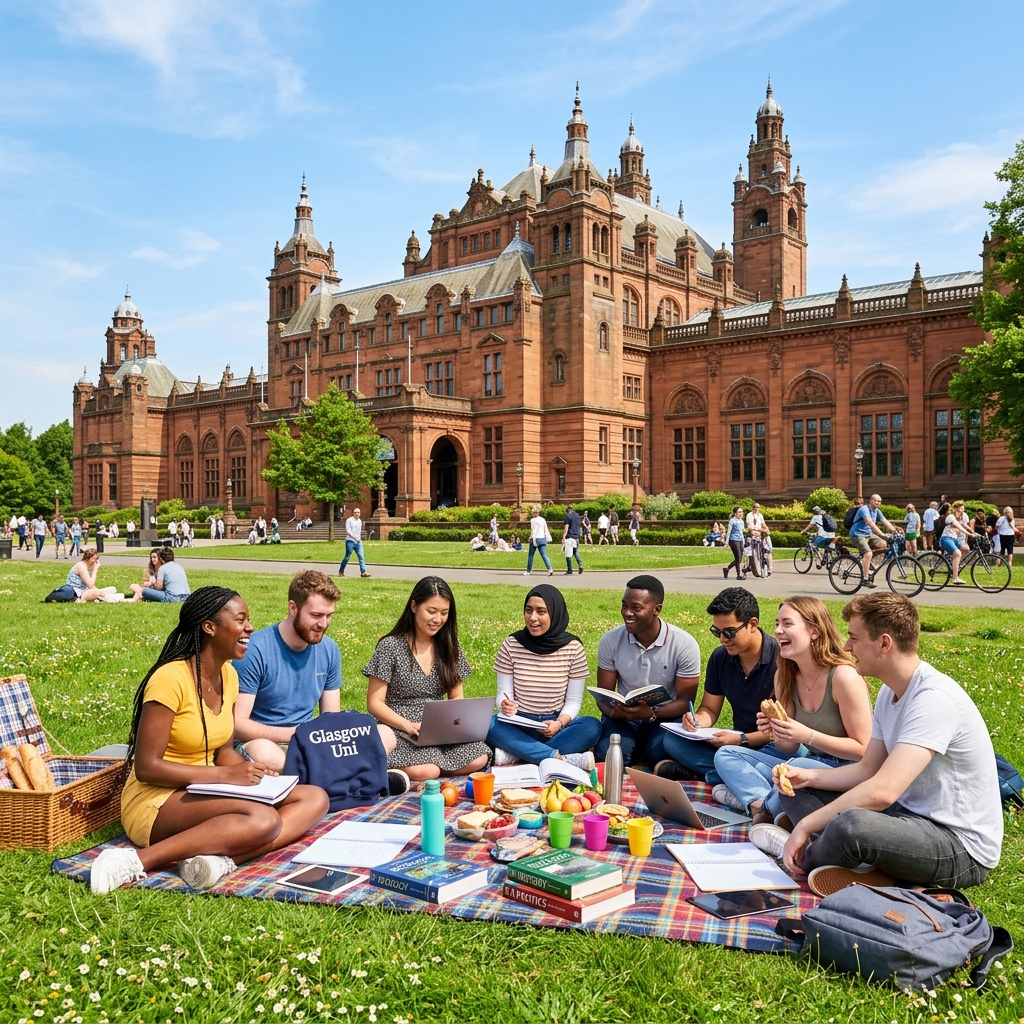
BSc Psychology
About this course
Psychology is the scientific study of the mind and behaviour, encompassing how people think, act, react, and interact, as the current description of this programme precisely captures. It is one of the most wide-ranging disciplines in higher education, drawing on neuroscience and evolutionary biology as well as social theory and cultural analysis, and its insights are relevant to understanding individuals in clinical contexts, organisations in professional settings, and societies at large. At its most rigorous, psychology is an empirical science that makes knowledge claims on the basis of carefully designed research rather than intuition or informal observation. At the University of Glasgow, this four-year full-time programme develops genuine scientific depth alongside the breadth expected of a strong undergraduate psychology degree. You will cover all the major sub-disciplines: cognitive psychology examining attention, memory, perception, language, and problem-solving; biological psychology investigating the neural and physiological bases of behaviour; developmental psychology tracing the course of human development from infancy through adulthood and old age; social psychology exploring how people influence each other through attitude, persuasion, conformity, and group dynamics; and individual differences examining personality, intelligence, and the measurement of psychological characteristics. Research methods and statistics receive sustained and serious attention throughout the programme, reflecting Glasgow's commitment to psychology as a science. The programme includes a year abroad, giving you the opportunity to study at a partner university in another country and engage with psychological research and teaching in a different context. Glasgow's strong research environment means you will encounter the discipline at the level of active inquiry, not just as received knowledge. Graduates from a BPS-accredited programme at Glasgow hold the Graduate Basis for Chartership, the first step towards becoming a chartered psychologist. Career destinations include mental health services, research, human resources, education, marketing, sport, social work, and a very broad range of professional roles. Postgraduate training is required for professional practice as a psychologist.
Syllabus & Modules
Typical curriculumStudent Satisfaction
National Student Survey - 135 respondents (76% response rate)
Similarly Ranked Alternatives


What comes next? 🎓
Choosing the right university starts with choosing the right school. Explore transparent, data-driven school profiles powered by official DfE statistics.
Explore Schools on WhatSchool.ai →