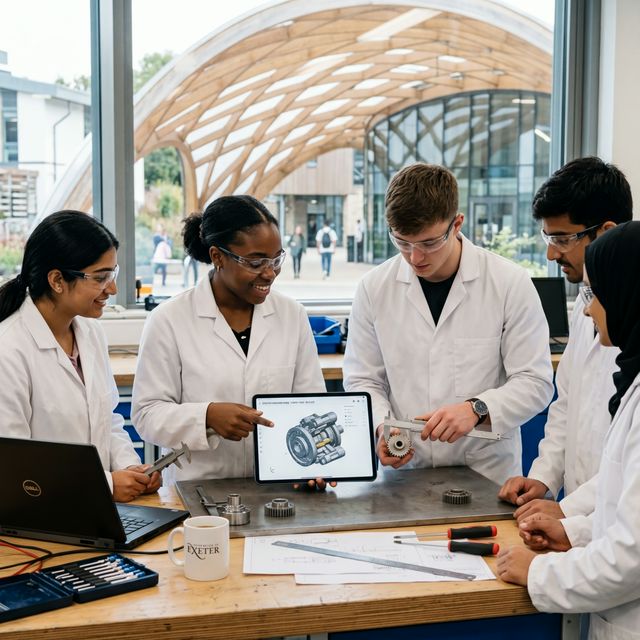
MEng Renewable Energy Engineering with Industrial Experience
About this course
Renewable energy engineering is one of the defining engineering disciplines of our time. As the world transitions away from fossil fuels, the design, development, and deployment of wind, solar, hydropower, tidal, and other renewable energy systems has become a matter of urgent practical and environmental importance. Engineers in this field work on the technologies that generate clean power, the systems that store and distribute it, and the analytical methods needed to assess and optimise energy performance at every scale from individual buildings to national grids. At the University of Exeter this four-year, full-time programme equips you with a deep understanding of the engineering principles and applied knowledge needed to work in the renewable energy sector. The programme is accredited by the Energy Institute and by the Institution of Engineering and Technology on behalf of the Engineering Council, meeting in full the academic requirements for registration as a Chartered Engineer. Industrial experience is embedded in the programme, giving you practical exposure to the real conditions and professional practices of the sector alongside your academic formation. You will study the engineering science underpinning different renewable technologies, energy systems analysis, grid integration, and the wider context of energy policy and sustainability. Graduates of renewable energy engineering are entering one of the fastest-growing areas of the global economy. Many move into roles in the wind, solar, marine, and hydropower industries, working as project engineers, design engineers, or technical consultants for developers, contractors, utilities, and government agencies. Others work in energy storage, grid systems, energy efficiency, or the emerging areas of hydrogen and heat transition. The programme's accreditation supports your path to chartered engineer status, and the combination of technical depth and industrial experience makes graduates highly competitive. Further study at Masters or doctoral level is available for those who want to specialise in a particular technology or research area.
Syllabus & Modules
Typical curriculumStudent Satisfaction
National Student Survey - 45 respondents (82% response rate)
Similarly Ranked Alternatives



What comes next? 🎓
Choosing the right university starts with choosing the right school. Explore transparent, data-driven school profiles powered by official DfE statistics.
Explore Schools on WhatSchool.ai →