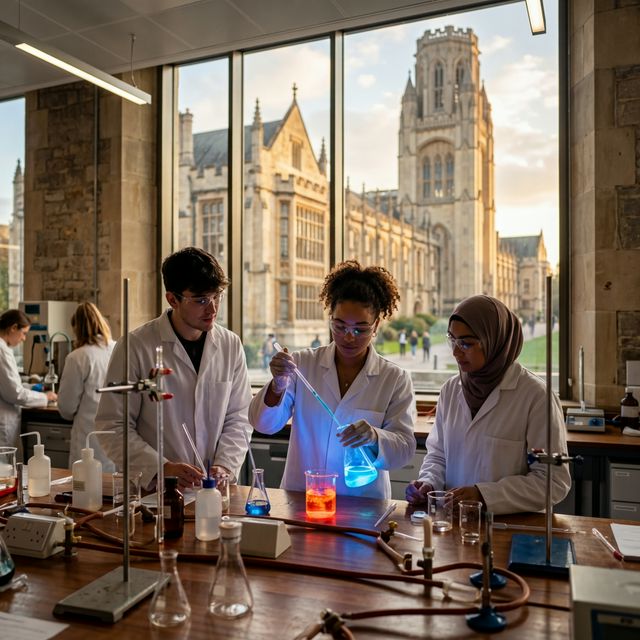
BSc Social Policy and Politics
About this course
Politics and social policy address two closely related questions: how are decisions made in society, and who bears the consequences? Politics examines the structures of power, the institutions through which collective choices are made, and the ideas that shape what those choices look like. Social policy asks what happens as a result, scrutinising how welfare, health, housing, education, and other domains are organised, funded, and experienced by different groups. Studying the two together gives you a joined-up understanding that neither discipline alone can fully provide. At Bristol this programme builds on a rich insight from the course itself: that politics prompts us to think about how society should be organised and how communities and states interact, and that this naturally leads to questions about how wellbeing is distributed and what forms of social organisation might better support human flourishing. You will engage with political theory and philosophy alongside empirical analysis of policy processes and outcomes. Comparative perspectives, examining how different countries organise their welfare states or manage political conflict, are woven throughout. The programme includes a foundation year for students who need additional preparation before the main degree, with the full course running across four years in that case. You will develop skills in critical argument, evidence evaluation, and research methods that are applicable well beyond the discipline itself. Graduates from programmes in politics and social policy are well suited to careers in the civil service and local government, policy analysis, NGOs and charities, political research, journalism, and international organisations. The analytical and communication skills the degree develops are valued in the private sector too, particularly in consultancy and public affairs. Many students go on to postgraduate study, whether a masters in public policy, social research, or political theory, or research degrees that prepare them for academic careers.
Syllabus & Modules
Typical curriculumStudent Satisfaction
National Student Survey - 15 respondents (68% response rate)
Similarly Ranked Alternatives



What comes next? 🎓
Choosing the right university starts with choosing the right school. Explore transparent, data-driven school profiles powered by official DfE statistics.
Explore Schools on WhatSchool.ai →