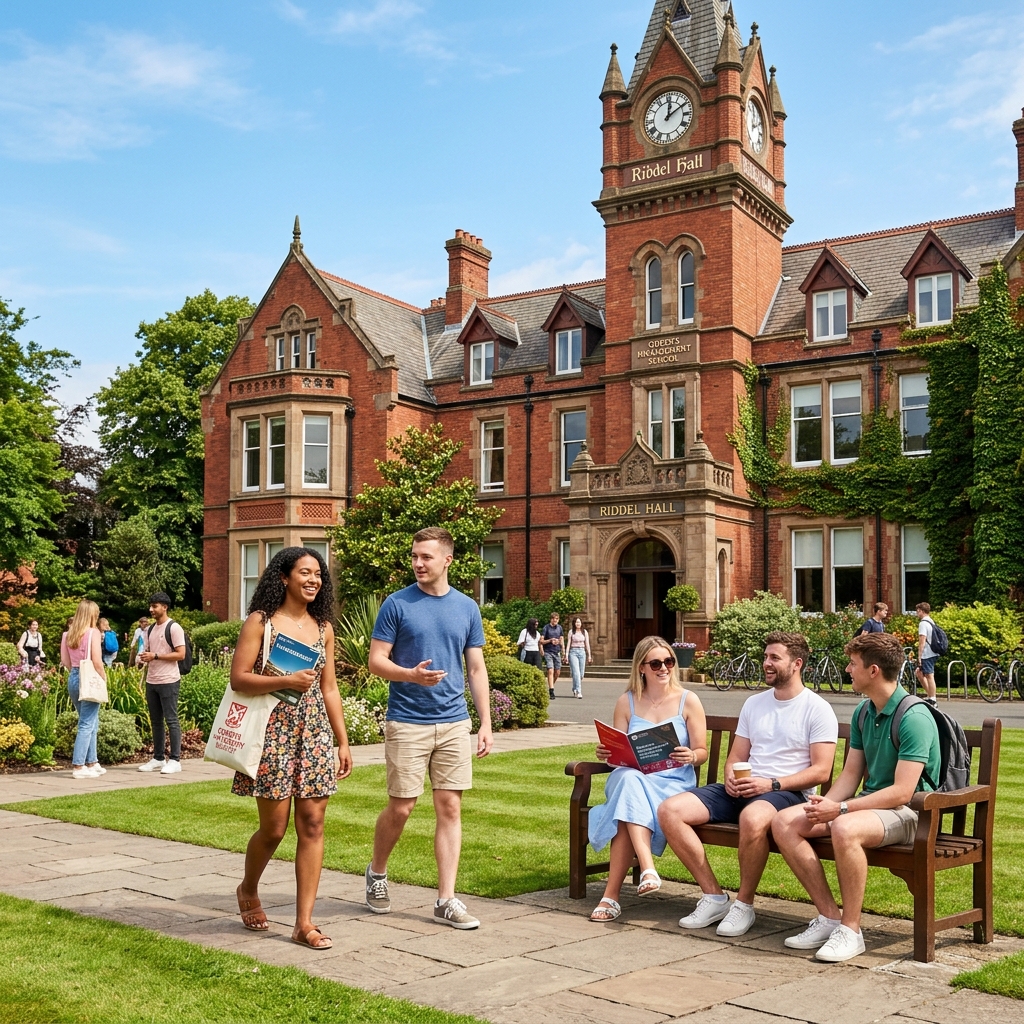
BSc Economics
About this course
Economics is the social science concerned with how scarce resources are allocated and how the decisions of individuals, firms, and governments shape the distribution of goods, services, and opportunities. It operates at two levels: microeconomics, which examines the behaviour of individual agents such as consumers, firms, and markets, and macroeconomics, which analyses the performance and management of economies as a whole, including output, employment, inflation, and trade. The models and analytical tools that economics develops are applied to an extraordinarily wide range of questions, from environmental policy and poverty reduction to financial regulation and healthcare. At Queen's University Belfast, this three-year, full-time programme develops the analytical and cognitive skills that economics requires, training you in both the qualitative reasoning and the quantitative techniques that economists use. You will study the core areas of micro and macroeconomic theory alongside econometrics, which equips you to analyse real data and test economic hypotheses rigorously. The programme builds computing, presentation, and writing skills alongside the technical economics content, developing the transferable competencies that make economics graduates attractive across a wide range of careers. Belfast provides a distinctive context for the study of economics, with a regional economy that has undergone significant transformation and a range of public, private, and research organisations that value economic analysis. Economics graduates are among the most versatile in the graduate labour market. Careers in finance, banking, economic consultancy, government, international organisations, think tanks, accountancy, and business are all well-trodden paths. The quantitative and analytical skills the degree develops are also valued in data science, technology, and policy roles. Many graduates pursue postgraduate study in economics, finance, public policy, or a related discipline, building specialist expertise for research or senior professional careers. The practical applicability of economic thinking across whatever field interests you most is one of the degree's most enduring strengths.
Syllabus & Modules
Typical curriculumStudent Satisfaction
National Student Survey - 15 respondents (77% response rate)
Similarly Ranked Alternatives
What comes next? 🎓
Choosing the right university starts with choosing the right school. Explore transparent, data-driven school profiles powered by official DfE statistics.
Explore Schools on WhatSchool.ai →