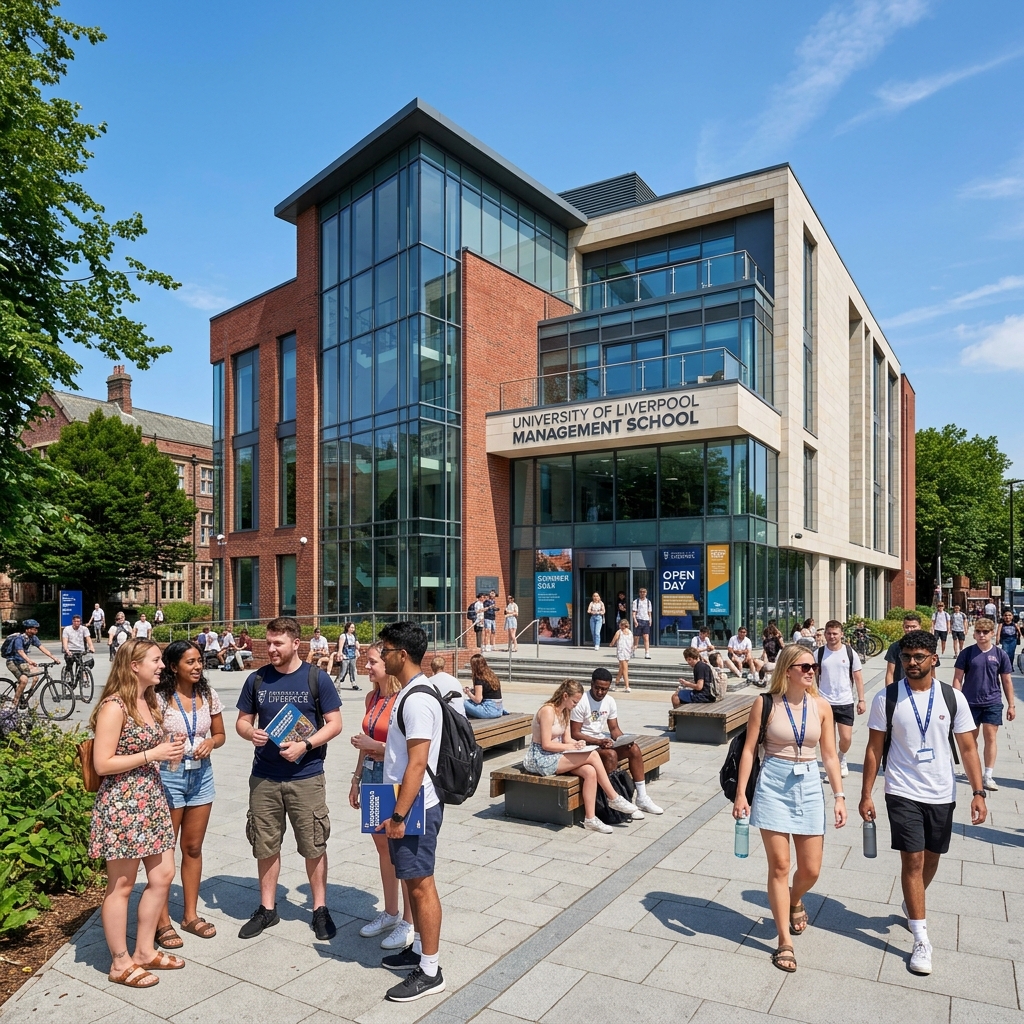
BA Economics
About this course
Economics is one of the most intellectually powerful social sciences, providing tools to analyse how individuals, firms, markets, and governments make decisions under conditions of scarcity and uncertainty. Its methods range from theoretical model-building and game theory to econometric analysis of large datasets, and its applications extend from public policy and development economics to finance, health, and environmental regulation. At the University of Liverpool you will study the core of economics, including microeconomic theory, macroeconomics, quantitative methods, and econometrics, alongside a range of applied fields that reflect the breadth of economic inquiry. You will develop rigorous analytical skills and the ability to construct and evaluate arguments from both theoretical principles and empirical evidence. The degree includes a year abroad, which places you at a partner institution in another country and gives you the opportunity to experience economics education in a different national and intellectual context. Liverpool's economics department is a research-active environment with expertise across both theoretical and applied economics. The city itself provides a rich context for thinking about economic questions, including industrial history, regional development, and inequality, and the university's connections to employers in the north-west and beyond support graduate outcomes across a wide range of sectors. Graduates of economics are among the most sought-after in the UK graduate market. Careers span financial services, banking, consultancy, the civil service, international organisations, research, journalism, and business. The quantitative skills developed in an economics degree are particularly valued in data-rich environments, and many graduates also continue to postgraduate study in economics, finance, data science, or public policy.
Syllabus & Modules
Typical curriculumStudent Satisfaction
National Student Survey - 210 respondents (62% response rate)
Similarly Ranked Alternatives



What comes next? 🎓
Choosing the right university starts with choosing the right school. Explore transparent, data-driven school profiles powered by official DfE statistics.
Explore Schools on WhatSchool.ai →