High Drop-out Rate Alert
50% of students drop out or transfer from this specific course. Consider asking why on an open day.
BA Education Studies
About this course
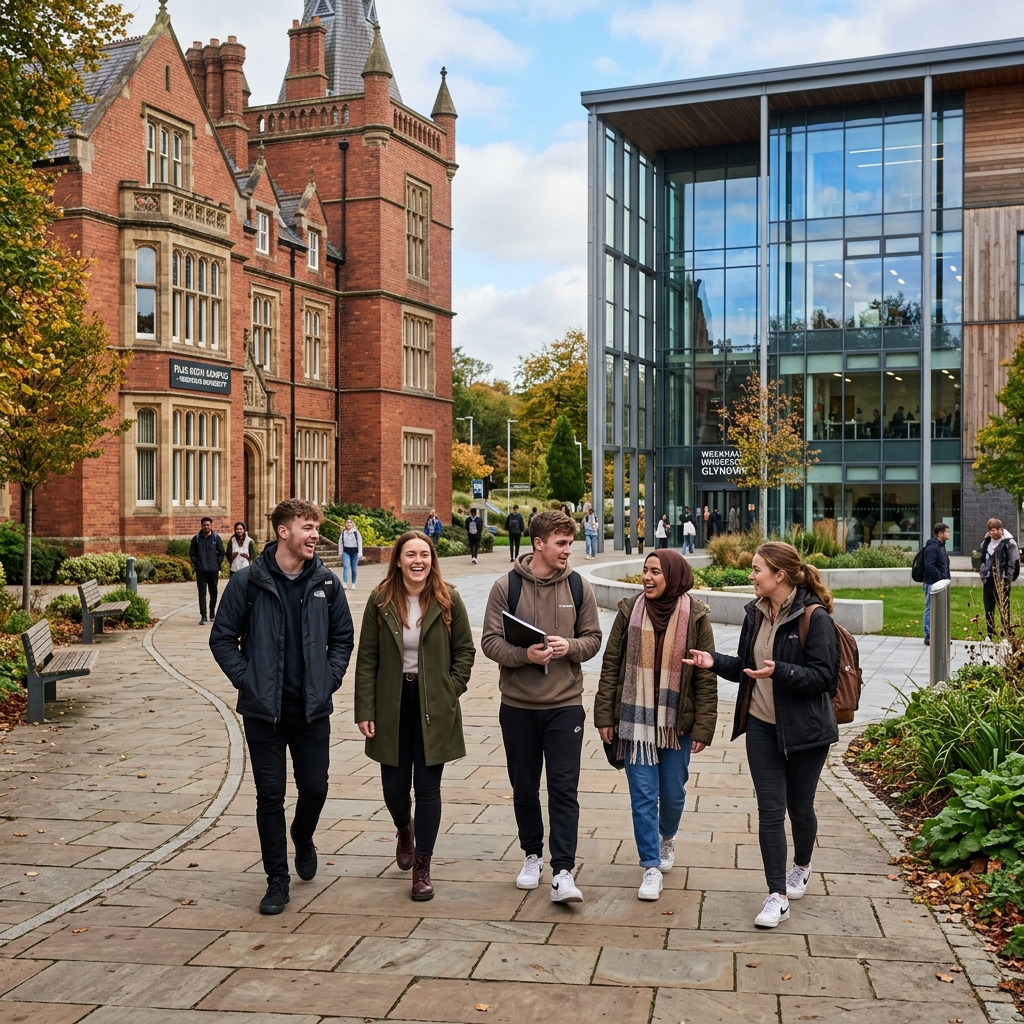
Education studies is the academic investigation of how education works, why it takes the forms it does, and what it means for the individuals who experience it and the societies that organise it. It draws on sociology, psychology, philosophy, history, and policy studies to ask fundamental questions about the purposes of education, the nature of learning, the distribution of educational opportunity, and the relationship between schooling and broader social structures. It is not primarily a teaching qualification, though it is an excellent foundation for those who later want to teach: it is a critical, analytical engagement with education as a social institution and a human experience. At Wrexham University, this three-year full-time programme includes a foundation year, which provides a strong grounding in academic and subject-specific skills before the main degree begins. This makes the programme accessible to students from a range of backgrounds, including those for whom higher education is a new experience or who are returning to study after time away. From the very start of the foundation year, you will begin engaging with placement activity, with a six-week placement providing early practical contact with educational settings. Throughout the programme, you will examine how education systems are structured and funded, how learning theories inform pedagogical practice, how inequality is reproduced through educational institutions, and how policy shapes what happens in classrooms and schools. The Welsh context of Wrexham University gives the programme a distinctive dimension, engaging with education policy as it operates under devolution and in a bilingual society. Graduates of education studies programmes go on to work in teaching after additional qualification, in educational support roles, in children's and youth services, in policy, in research, in educational publishing, and in a range of community and voluntary sector roles. The analytical and reflective skills the degree develops are valued across many professional contexts.
Syllabus & Modules
Typical curriculumStudent Satisfaction
National Student Survey - 15 respondents (88% response rate)
Similarly Ranked Alternatives

What comes next? 🎓
Choosing the right university starts with choosing the right school. Explore transparent, data-driven school profiles powered by official DfE statistics.
Explore Schools on WhatSchool.ai →