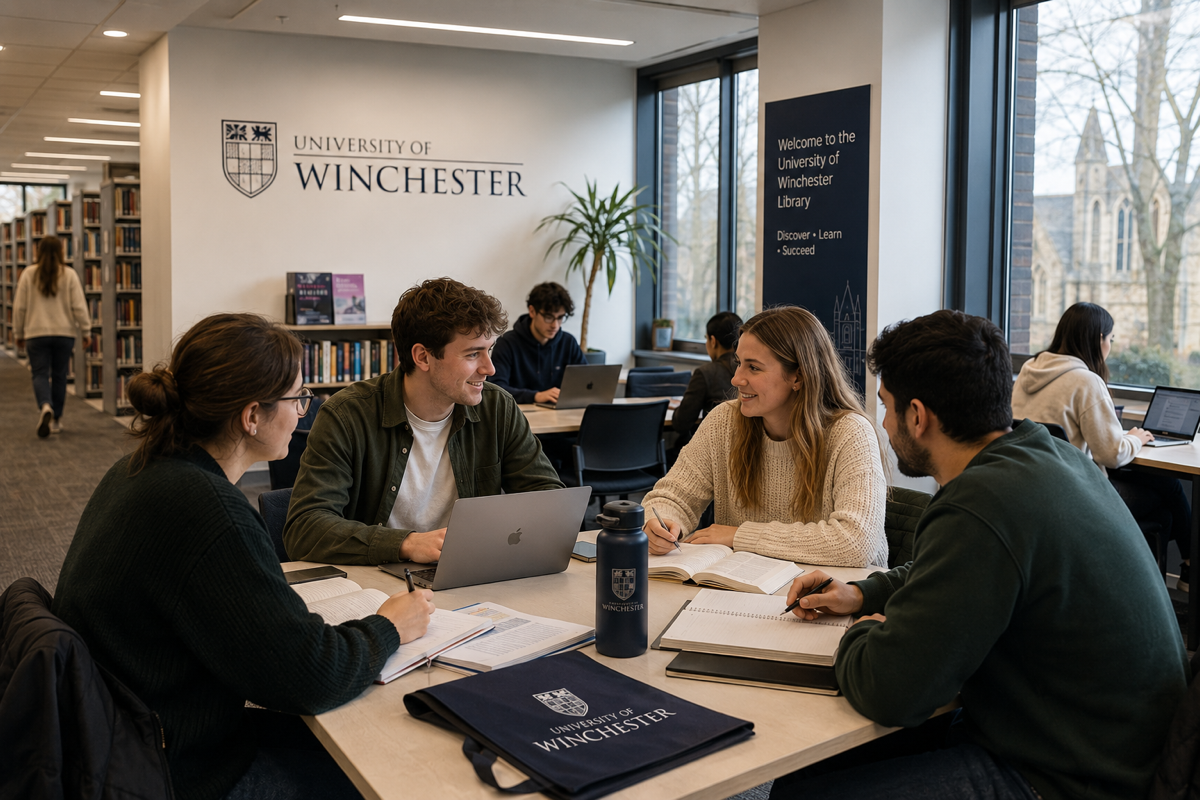
BA English Literature and Film
About this course
Literature and film are two of the defining art forms of the modern era, and they share more than is sometimes assumed. Both are narrative arts, concerned with how stories are told, what perspectives they adopt, whose voices are heard, and what they reveal about the societies that produce them. Studying them together allows you to bring the close analytical skills of literary criticism to bear on film, and to read novels and poetry with an awareness of how visual storytelling has changed the way we imagine narrative. At the University of Winchester this three-year, full-time programme draws on the research interests and expertise of staff with strong backgrounds in both disciplines and in the spaces between them. You will develop sophisticated skills in close reading, critical argument, and written and oral presentation, learning to analyse texts and films with precision and to locate them within their historical and cultural contexts. You will engage with a wide range of literary periods and traditions alongside the history and theory of cinema, from the silent era to contemporary digital filmmaking, and you will consider questions about adaptation, authorship, genre, and representation that cross between the two fields. The analytical, argumentative, and communicative abilities the programme develops are genuinely transferable, and graduates move into a wide range of careers. Many work in publishing, journalism, media, education, arts administration, and the cultural sector. Those drawn to film specifically pursue careers in screenwriting, script editing, film criticism, production, or distribution. Others use the writing and analytical skills the degree builds to enter communications, public relations, marketing, or the civil service. Postgraduate study in English literature, film studies, creative writing, or journalism is a natural continuation for those who want to deepen their academic or creative practice. The programme's emphasis on analysis and expression is, as the course itself notes, directly preparatory for a wide variety of professional futures.
Syllabus & Modules
Typical curriculumStudent Satisfaction
National Student Survey - 20 respondents (63% response rate)
Similarly Ranked Alternatives



What comes next? 🎓
Choosing the right university starts with choosing the right school. Explore transparent, data-driven school profiles powered by official DfE statistics.
Explore Schools on WhatSchool.ai →