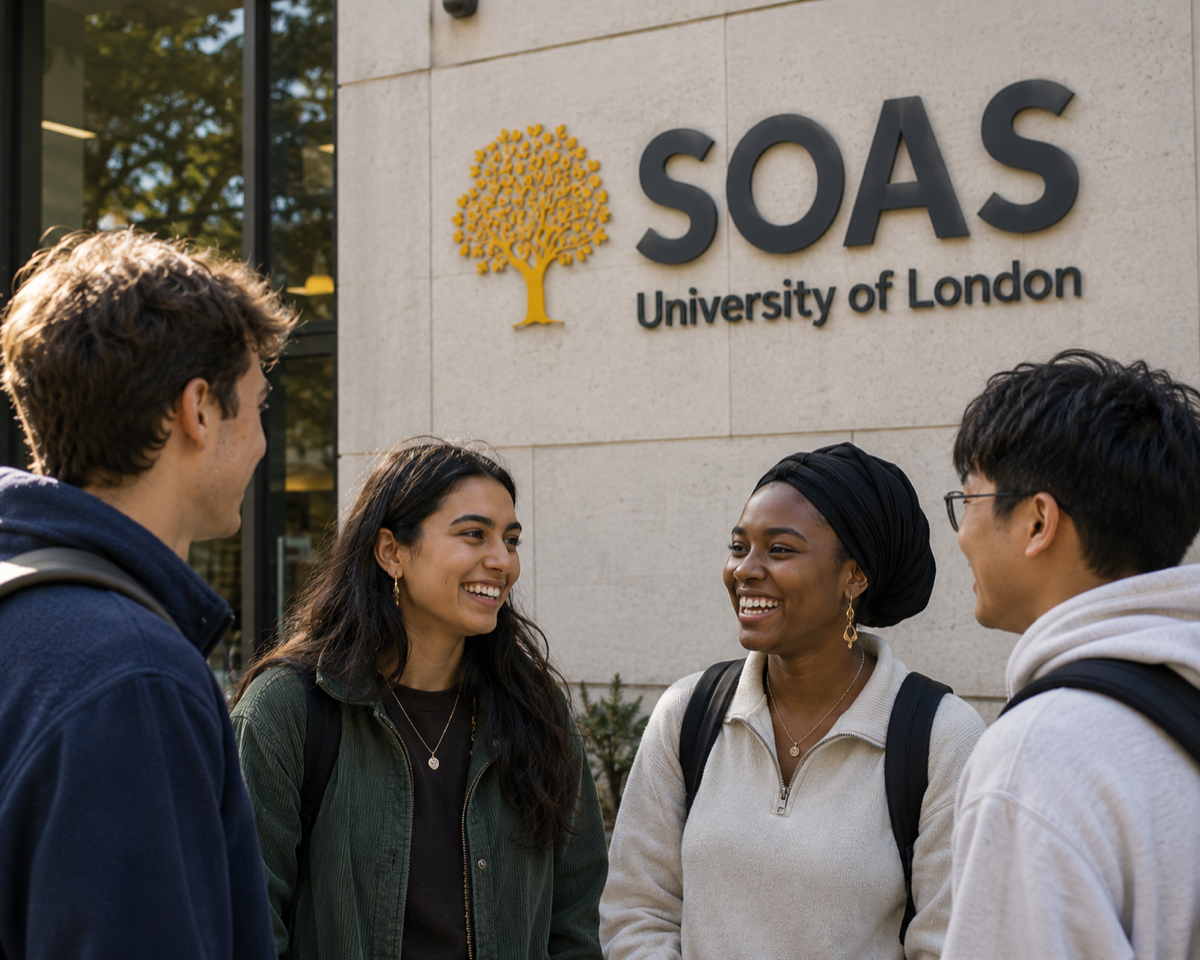
BA International Relations and Arabic
About this course
International relations and Arabic is a combination that takes on particular significance in the present geopolitical moment. Arabic is the official language of more than twenty countries, the first language of over three hundred million people, and the liturgical language of Islam, giving its speakers access to one of the most important cultural, religious, and political spaces in the world. International relations examines how states, international institutions, and non-state actors interact in an increasingly interdependent but deeply contested global order. At the School of Oriental and African Studies in London, this four-year full-time programme draws on SOAS's exceptional expertise in both fields. The Arabic language programme is one of the most rigorous and comprehensive in the UK, developing your linguistic proficiency from beginner through to advanced levels while also introducing you to Arabic literature, culture, and intellectual history. The international relations strand provides the theoretical and empirical tools to understand how global politics works, with particular depth in the Middle East and North Africa regions that are central to SOAS's expertise. The programme includes a foundation year, which provides a structured entry route for students who need additional preparation before the main degree. Graduates from international relations and Arabic programmes go on to careers in diplomacy, intelligence, journalism, international development, NGOs, international business, and the civil service. The combination of Arabic linguistic competence and political analytical skills is genuinely rare and highly valued by organisations that operate in the Arab world or on issues connected to it. Further study at postgraduate level in Arabic studies, Middle East politics, Islamic studies, or international relations is a natural route for those wishing to develop specialist expertise.
Syllabus & Modules
Typical curriculumStudent Satisfaction
National Student Survey - 10 respondents (69% response rate)
Similarly Ranked Alternatives



What comes next? 🎓
Choosing the right university starts with choosing the right school. Explore transparent, data-driven school profiles powered by official DfE statistics.
Explore Schools on WhatSchool.ai →