BA Psychological and Behavioural Sciences
About this course
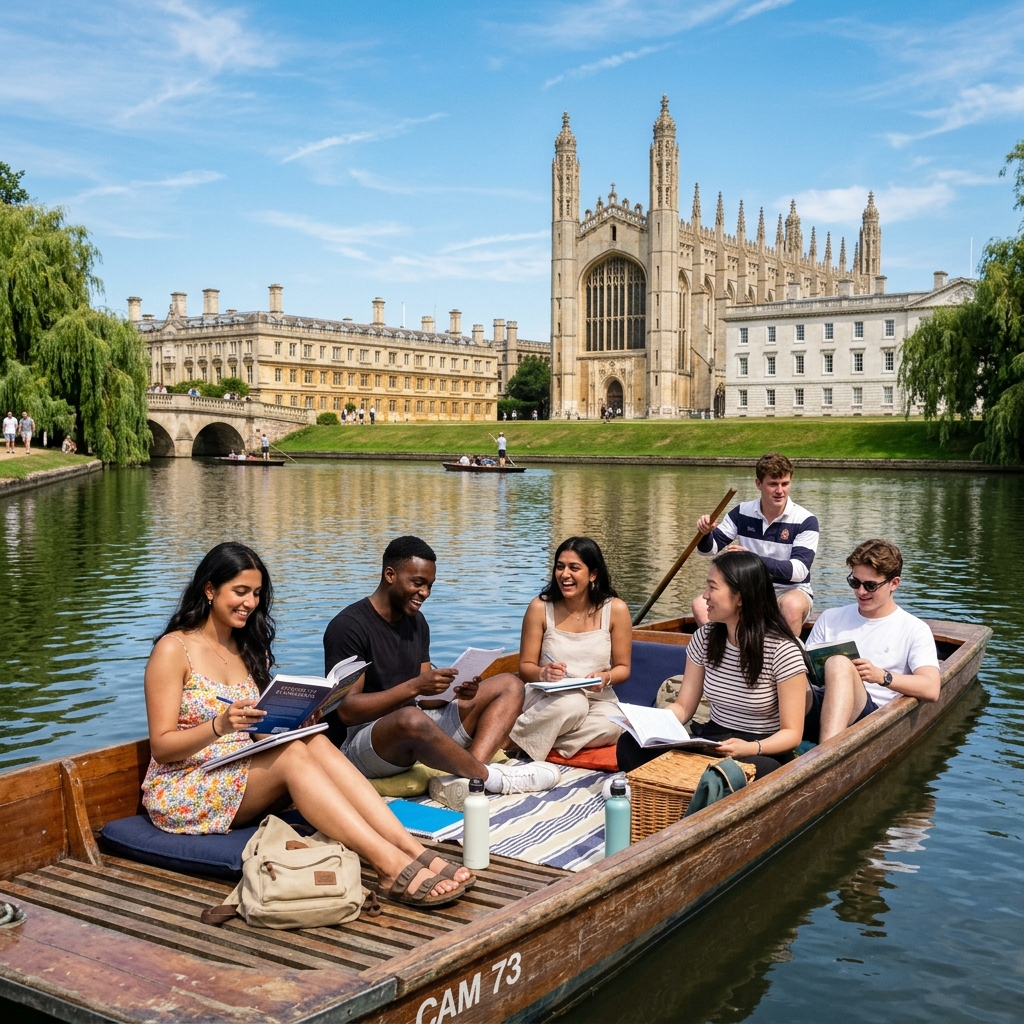
Psychological and behavioural sciences at Cambridge offers an approach to the study of mind, brain and behaviour that is broader and more genuinely interdisciplinary than most psychology degrees. Rather than teaching psychology as a single discipline with a fixed canon, Cambridge situates it within the wider context of the behavioural sciences, drawing on cognitive science, neuroscience, social science, linguistics and biology to address fundamental questions about how people think, feel, act and interact. This three-year full-time programme expects rigorous intellectual engagement and develops both empirical and theoretical skills at a demanding level. You will study cognitive psychology, covering perception, attention, memory and language, alongside social psychology, developmental psychology and the biological bases of behaviour. The behavioural sciences framing means you will also engage with economic psychology, evolutionary approaches to behaviour, social neuroscience and the statistical and computational methods that increasingly underpin research across these fields. Cambridge's tutorial system means your learning is closely supervised and highly personalised, with regular one-to-one or small-group supervision alongside lectures and practicals. A typical tariff of around 200 points is stated, though in practice the programme is highly competitive. The depth and quality of training Cambridge provides is recognised internationally. Graduates pursue a very wide range of careers, given the analytical and quantitative skills the degree develops. Research careers in psychology, neuroscience and behavioural economics are one path; others enter medicine, law, finance, consulting, technology, policy and the civil service. Many graduates proceed to doctoral research at Cambridge or other leading universities, and the degree is one of the strongest foundations available for any career that requires rigorous thinking about human behaviour and decision-making.
Syllabus & Modules
Typical curriculumStudent Satisfaction
National Student Survey - 45 respondents (55% response rate)
What comes next? 🎓
Choosing the right university starts with choosing the right school. Explore transparent, data-driven school profiles powered by official DfE statistics.
Explore Schools on WhatSchool.ai →