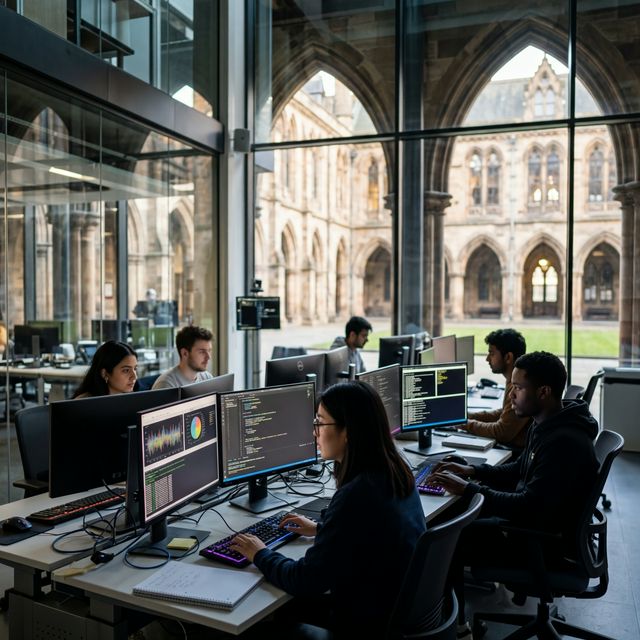
MA Theology & Religious Studies/Computing Science
About this course
Theology and religious studies combined with computing science is an intellectually ambitious pairing that brings together one of the humanities' oldest and richest traditions of inquiry with one of the twenty-first century's most consequential technical disciplines. Theology and religious studies encompasses the study of religion, sacred texts, theology, the Bible and the full range of religious traditions, examining how they relate to politics, history, literature, philosophy, art and culture as well as to personal belief and practice. Computing science provides the theoretical and practical foundations of digital systems, from algorithms and data structures through to software engineering, artificial intelligence and the computational methods that are reshaping knowledge production and human society. At the University of Glasgow you will study both disciplines within a research-intensive university of considerable strength in both areas, pursuing the rich questions about meaning, knowledge and value that theology and religious studies raises alongside the rigorous technical education that computing science demands. The programme runs over four years full time, reflecting the Scottish honours degree structure, and includes a year abroad, giving you the opportunity to experience both disciplines in a different intellectual and cultural environment. You will develop skills in theological and religious analysis, philosophical argument, programming and software development, algorithmic thinking and the professional and ethical dimensions of computing, alongside the capacity to think across the boundary between humanistic and technical modes of understanding. Graduates from this unusual combination pursue careers in technology companies with roles requiring ethical, cultural or social sensitivity, in digital humanities research, in religious and educational organisations that use technology, in policy and governance of digital systems, and in fields where the ability to navigate both technical and humanistic questions is a genuine advantage. Postgraduate study in theology, computing, digital humanities or ethics of technology is also a natural route.
Syllabus & Modules
Typical curriculumStudent Satisfaction
National Student Survey - 140 respondents (68% response rate)
Similarly Ranked Alternatives
What comes next? 🎓
Choosing the right university starts with choosing the right school. Explore transparent, data-driven school profiles powered by official DfE statistics.
Explore Schools on WhatSchool.ai →